Before
- Records and bill requests go out to every provider on a case, and someone keeps track of who has answered, often in notes or a spreadsheet.
- Itemized bills are added up by hand against the ledger and PIP payments; a missing line or an unlisted provider (the reading radiologist) is easy to miss.
- Follow-up letters are written one at a time, and the demand waits on the last record.
After
- Each case's provider log and the bills received are checked together: what's in, what's overdue, what doesn't add up.
- Overdue requests, bill totals that don't match, dates outside treatment and providers nobody requested from are flagged; anything unclear is marked needs a look.
- A medical specials table and follow-up request drafts come out ready for the paralegal and attorney. Nothing is sent on its own.
Case file (pick a sample, edit it, or paste your own)
Sample cases:
This page reads text only. In a pilot, PDF records and bills are read first, and anything that can't be read with confidence is shown as "needs a look" instead of being guessed.
Pick a sample case or paste your own.
Records & bills status
Every provider, what's in, and the next step.Medical specials, prepared
For attorney reviewBalances use itemized bills where they agree with the ledger; open items stay marked until they're resolved.
Follow-up requests to providers
Drafts · not sentBatch:
Edit freely. In a real build they open as drafts for your paralegal to send with the authorization; nothing goes out on its own.
Under the hood: fields read from each document (JSON)
How the check works
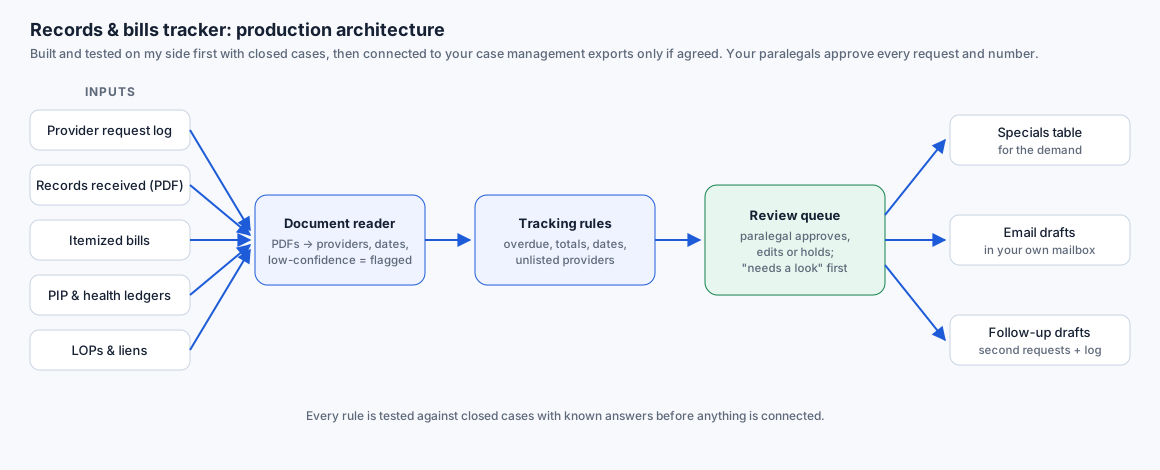
- Read. The provider log and itemized bills become structured fields: provider, treatment dates, request date, what's been received, billed amounts, PIP and health insurance payments, letters of protection. A production build reads PDF records and bills too, held to the same fields.
- Check. Requests older than 30 days are due a follow-up, older than 60 a second request and a call. Itemized bills must add up to the ledger, dates of service must fall in the treatment window, and every billing provider must be on the log.
- Hold, don't guess. PIP paid on a bill that isn't on file, mismatched totals and unlisted providers are flagged for the paralegal. Nothing medical or legal is decided here.
- Prepare. The medical specials table is built from what's complete, and follow-up request drafts are written for each overdue provider.
Production architecture